
Pelvic Floor Assessment and Treatment
Identifying and treating the pelvic floor tension that's triggering urgency. Many OAB patients have a tight pelvic floor that's sending false signals to the bladder, and releasing it changes the pattern.
If your bladder is running your schedule (dictating when you leave, where you sit, and whether you feel safe being far from a bathroom) that's not just inconvenient. It's a quality-of-life issue with a real physical solution.

Overactive bladder affects about 33 million Americans, with women affected at significantly higher rates than men. Most people are offered medication as a first-line treatment, but medication doesn't retrain your bladder. Pelvic floor therapy does.
Signs and Symptoms
If you’re nodding at more than a few of these, your pelvic floor is asking for attention.
Sudden, strong urges to urinate that are difficult to control
Leaking on the way to the bathroom (urge incontinence)
Urinating 8 or more times in a 24-hour period
Waking up more than once a night to urinate
Planning outings around bathroom locations
Going "just in case" before leaving anywhere
A bladder that seems to fill quickly even after you just went
Triggers like running water, cold weather, or unlocking the front door
Root Cause
Overactive bladder is characterized by an overactive detrusor muscle (the bladder wall muscle) that contracts at the wrong times, sending urgent signals before the bladder is actually full. This can happen with a full bladder or an almost-empty one, the signal doesn’t match the reality.
The pelvic floor plays a critical role in bladder control. When it’s too tight or not coordinating properly, it can trigger bladder urgency and interfere with the normal inhibition reflex that should allow you to delay urination.
The nervous system is also involved, many OAB patients have a sensitized bladder-brain connection that creates urgency in response to triggers that shouldn’t cause urgency at all.
Your Treatment
Pelvic floor PT combines bladder retraining with pelvic floor rehabilitation to address OAB at its source. This is fundamentally different from medication, which reduces urgency signals without teaching the bladder or pelvic floor to behave differently.
Your Path to Relief
A clear, supportive process designed to meet you where you are with guidance every step of the way
Our Services
We offer a flexible approach to pelvic health that adapts to your life. Each service is designed to address root causes and build lasting strength.
One-on-one virtual pelvic floor physical therapy for women who want expert care and accountability from anywhere.

Hands-on pelvic floor physical therapy in Orange County for those ready to resolve pain, bladder issues, and pelvic dysfunction.
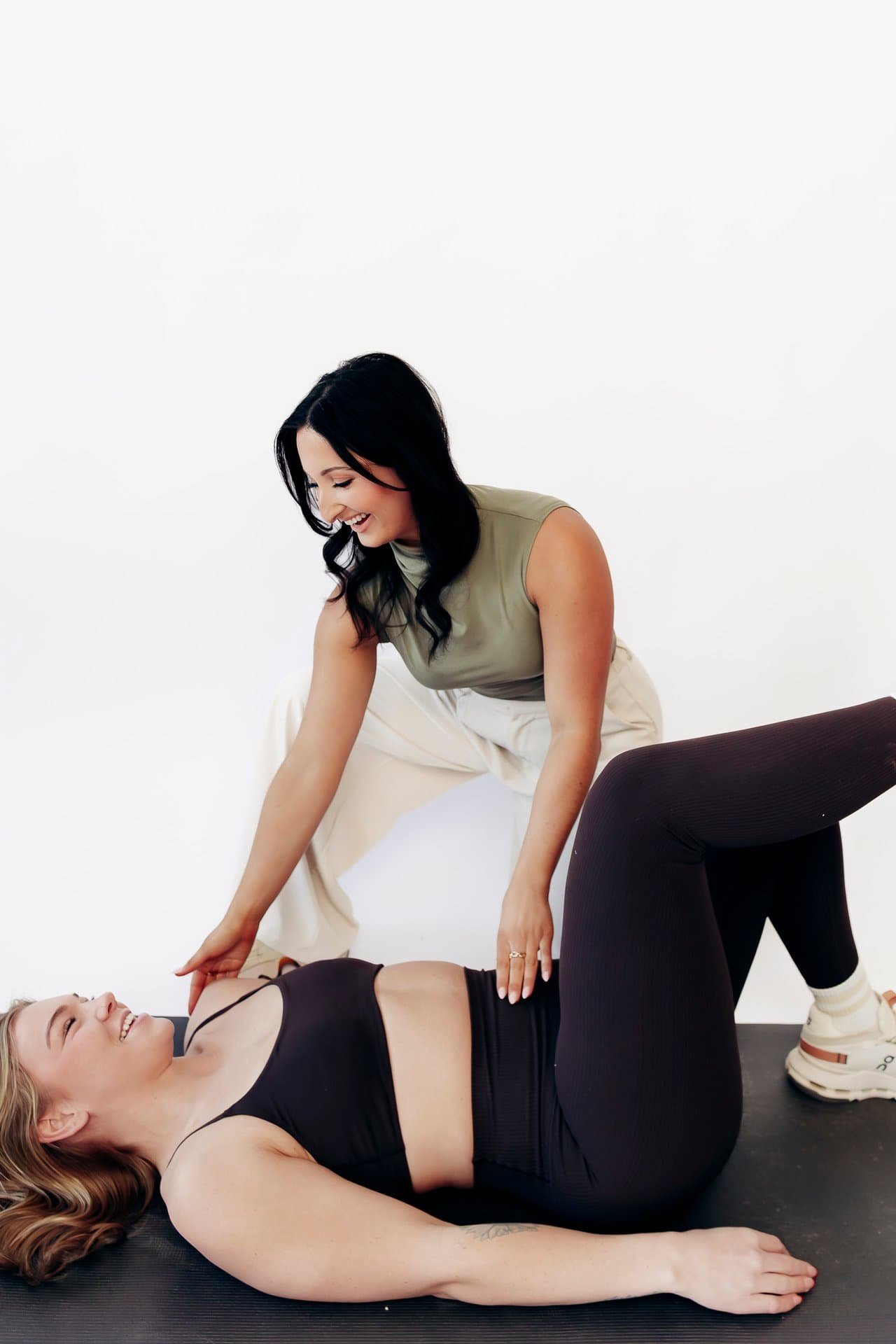
Evidence-based strength and nutrition coaching designed to help you improve body composition and rebuild confidence, without sacrificing your hormones, gut health, or your social life.

Yes. Medication reduces urgency signals but doesn’t retrain the pelvic floor or change bladder behavior. PT addresses the root causes, and many patients who haven’t responded well to medication see good results with a behavioral and physical approach.
Bladder retraining is a structured process of gradually extending the time between bathroom visits to teach the bladder to hold more and signal accurately. It’s combined with urge suppression techniques, specific strategies to manage urgency without running to the bathroom.
Counterintuitively, restricting fluids often makes OAB worse, concentrated urine is more irritating to the bladder. The goal is optimal hydration with the right types of fluids, not less fluid overall.
Yes, OAB can be treated well online. Bladder retraining, urge suppression, pelvic floor exercises, and lifestyle education are all very effective in virtual sessions.
You shouldn’t have to plan every outing around the nearest bathroom. Book a free consultation to talk through what’s driving your OAB and what treatment looks like.